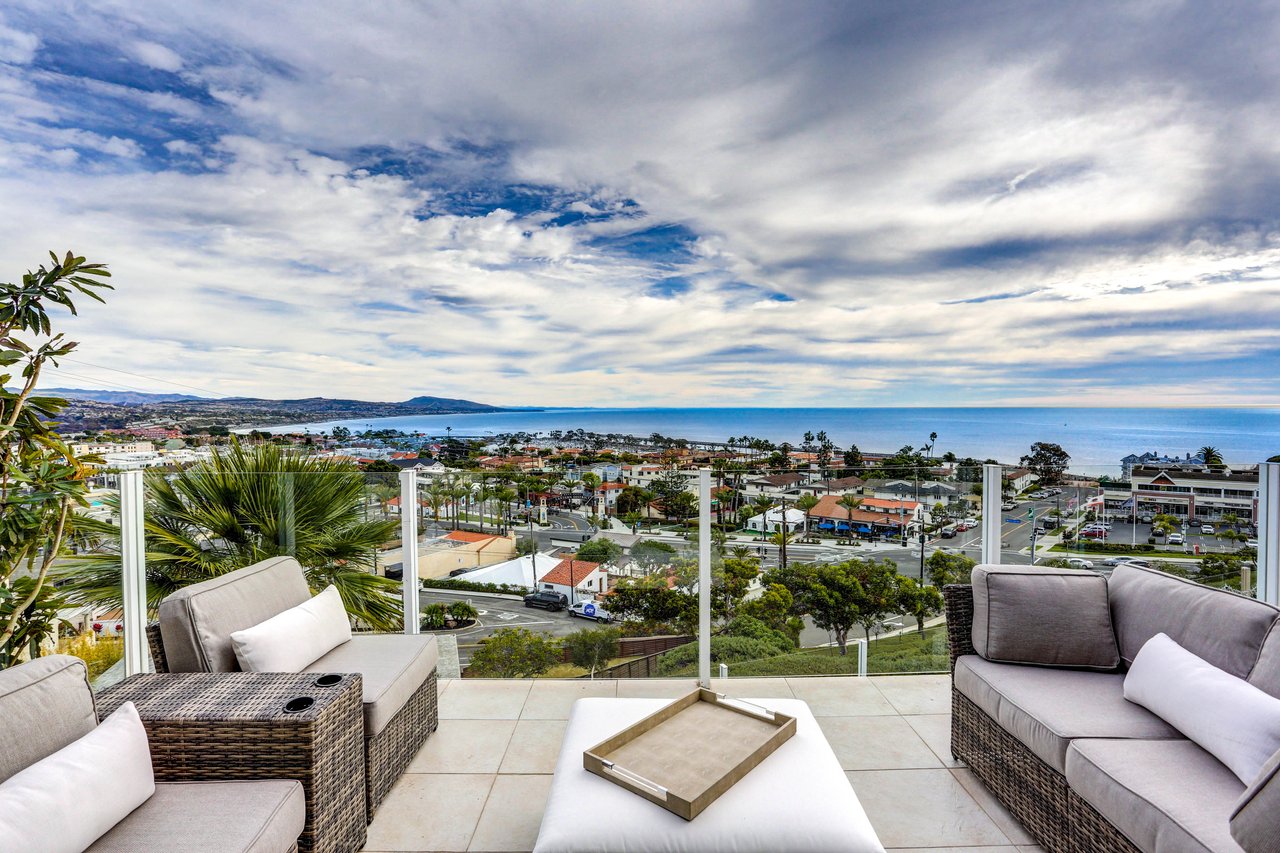
Every conversation about Dana Point Harbor this year eventually turns to fencing. Which storefronts closed at the end of April. Where the demolition crews are working this month. When Mariner's Village reopens. It is a construction story, and a real one, but it is not the only story the harbor is telling right now.
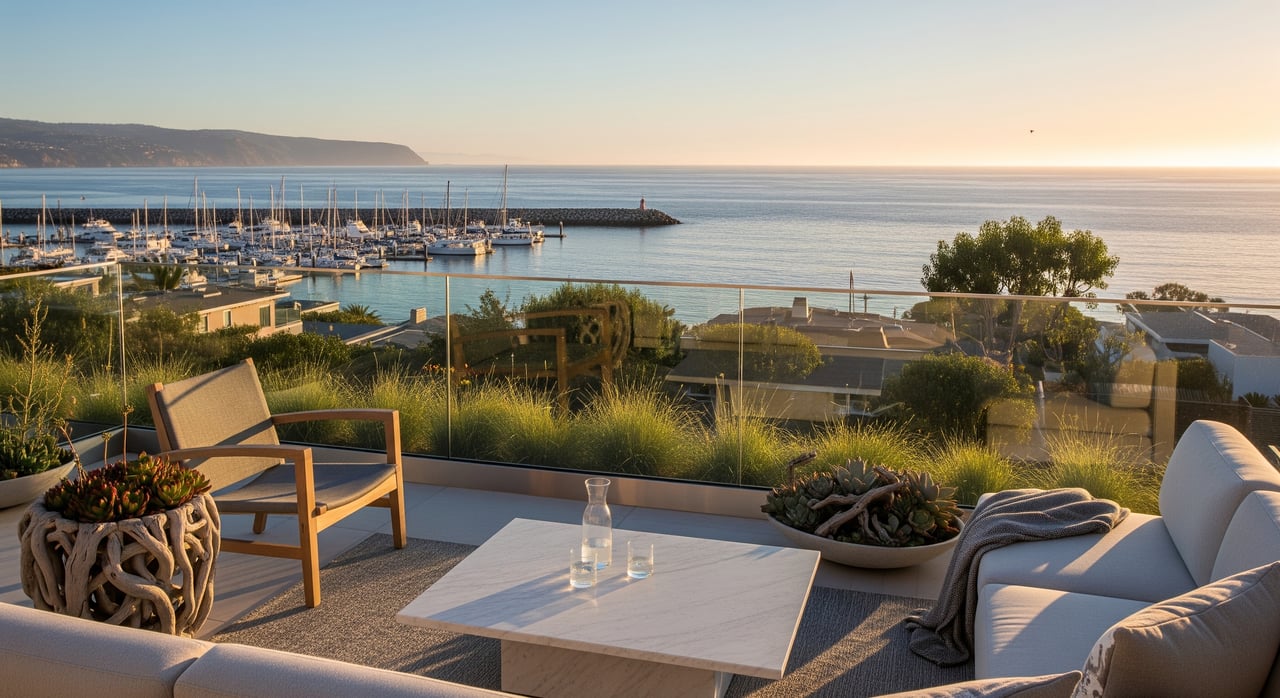
At the western end of the harbor, past the boat slips and well outside the Phase 3 footprint that runs between Dana Wharf and Casitas Way, there is a stretch of water that has nothing to do with any of it. Baby Beach does not run on a construction schedule. It runs on tide charts, moon phases, and the timing of a few thousand dolphins that pass through every year. If you live here and you own a paddleboard, that is the calendar that actually governs your weekend.
Why the Water Behaves Differently Here
Dana Point's open coast has real waves. Doheny State Beach eases you in with gentle wave entry, Salt Creek Beach asks for intermediate skill, and Strands Beach trades convenience for a quieter, more secluded cove backed by bluffs. Baby Beach sits inside the harbor breakwater, and that changes the physics of the whole cove. The wall blocks the swell before it reaches the sand, so the water inside stays flat and calm on nearly every day of the year, a rarity anywhere on the Southern California coast. That is why paddleboard instructors default to it for first lessons, why parents bring toddlers here instead of the open beaches, and why it earns its reputation as one of the most forgiving beginner launch points in the region.
The tradeoff for that calm is crowding. The lot off Dana Point Harbor Drive fills fast on weekends, and the practical move locals have settled on is arriving before 9 a.m. to get a spot without circling the block. After that window, the beach still works, but the parking search becomes part of the outing.
The Loop Most Residents Actually Paddle
Ask around and you will hear a version of the same route. Launch from Baby Beach, paddle west along the breakwater wall, then loop back through the interior marina channel for a look at the fishing fleet and the harbor mouth. The full circuit runs close to two miles at an easy pace, flat enough for a first-timer and interesting enough that people who have lived here for years still do it on a Saturday morning.
The wildlife is the part that surprises newcomers. Sea lions haul out on the channel buoys year-round, unbothered by paddleboards close enough to photograph. Common dolphins move through the harbor mouth regularly, especially before boat traffic builds up in the morning, and the wider stretch of coast around Dana Point is known for pods numbering in the tens of thousands moving through these waters over the course of a year. Federal rule keeps the encounters respectful on both sides: boaters and paddlers are expected to hold fifty yards back from marine mammals rather than approach them, letting the animals set the distance.
For gear, two names come up consistently among residents rather than visitors passing through for a day trip. Pure Watersports, based at the Embarcadero, is Orange County's leading Hobie kayak dealer and rents kayaks, paddleboards, and jet skis out of the harbor. Westwind Sailing, nearby, handles kayak and SUP rentals along with lessons and dockside instruction for people who want more than a rental and a shove off the sand.
The Ocean Institute Runs Its Own Clock, Too
A few hundred yards from Baby Beach, at 24200 Dana Point Harbor Drive, the Ocean Institute has spent decades building a calendar that has nothing to do with restaurant openings or commercial core phasing. Its weekend program is built around low tide, not the clock. On weekends when the tide drops far enough, staff lead public tide pool hikes along the rocks, pointing out sea stars, anemones, and crabs that only surface when the water pulls back. The schedule shifts with the tide tables, not with the calendar on the wall, which is a small detail that tells you a lot about how this institution thinks about its own neighborhood.
The Institute also runs a two-hour interactive kayak tour through the harbor that leans into local history and ecology rather than just handing you a paddle, covering the harbor's formation and its ecosystem while you're out on the water. For a different kind of afternoon, the schooner Spirit of Dana Point, a replica of a Revolutionary War-era tall ship powered by five thousand square feet of canvas sail, takes guests out to help raise the sails and take the helm rather than just ride along.
The most seasonal of the Institute's offerings is its Bioluminescence Night Cruise aboard the research vessel Sea Explorer, which only runs during summer months and only makes sense on a clear, dark night, ideally near a new moon when the bioluminescent plankton and nocturnal marine life are easiest to see glowing off the wake. That window is closing as summer winds down, which is worth knowing if it has been on your list.
Ocean Institute's summer camp season for kids ages five to seventeen ran daily from June 15 through August 14 this year, so if you have been meaning to get your kids on a tall ship or into a tide pool before school starts back up, that particular door just closed for the season. The water sports and weekend tours keep going well past it.
A Short List Before You Launch
If you are new to the harbor or just haven't been out in a while, a few things make the difference between a smooth morning and a frustrating one:
- Get to the Baby Beach lot before 9 a.m. on weekends. After that, plan on circling or parking farther out and walking gear in.
- Stay fifty yards from sea lions and dolphins. They are used to paddlers and will move around you if you hold your distance and keep your paddle quiet in the water.
- Check the tide table before a tide pool hike. The Ocean Institute's weekend hikes are timed to low tide specifically, not a fixed hour.
- Book bioluminescence cruises early once you decide to go. They only run in summer, and a clear, moonless night is worth waiting for if the forecast allows it.
- If you want the harbor loop rather than just floating near the sand, budget close to an hour for the full breakwater-to-marina-channel circuit at an easy pace.
Two Calendars, One Neighborhood
The construction calendar gets the headlines because it is visible from the road. Fencing, demolition, a food hall under a name like Boathouse rising where a parking lot used to be. That story matters and it will keep unfolding through the rest of 2026 and into 2027.
But the water calendar has been running the whole time, unaffected by any of it, because the reason Baby Beach exists as a calm cove has nothing to do with which restaurants are open on the Wharf. It has to do with a breakwater built decades ago and a stretch of coastline that continues to draw sea lions, dolphins, and low-tide pools regardless of what is happening a quarter mile away. If you live in Dana Point and you have been avoiding the harbor because you assume it is all torn up right now, the western end of it never stopped working the way it always has.
That is the version of the harbor most people who live here actually use. It just doesn't come with a press release.
If you are thinking about what a home near this stretch of coastline is worth in today's market, Kathy Samuel has spent decades watching how Dana Point's rhythms, from the tide charts to the transformation at the harbor, shape what buyers are willing to pay for proximity to it. Request a Private Home Valuation to get a clear, current read on where your property stands.